


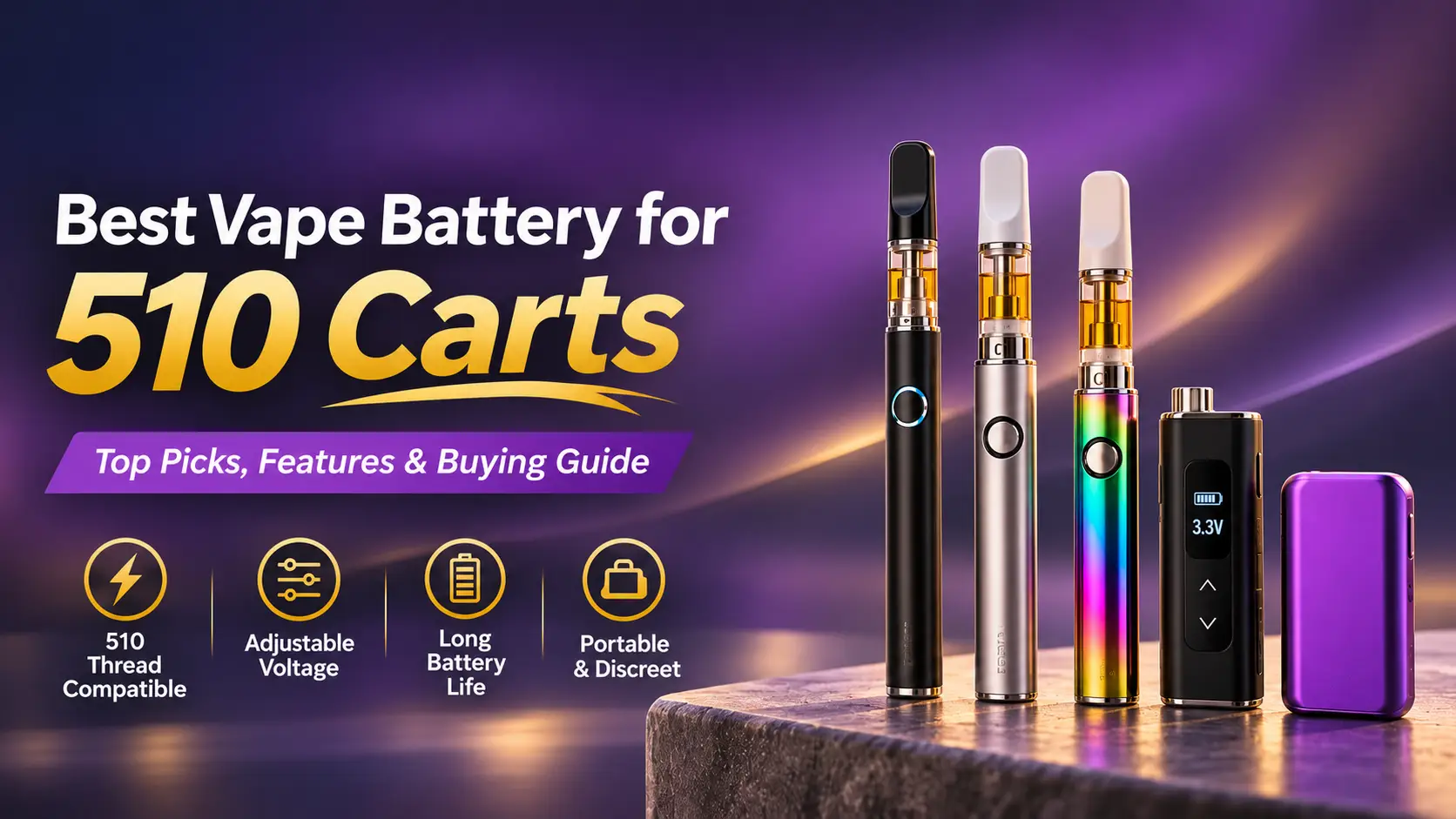
Searching for the best vape battery for 510 carts can raise several questions: What does “510 thread” mean? Are all cartridges compatible with the same battery? What safety information should you check before trusting a product description?
A 510-thread connection is a widely used connector format for certain electronic vaping devices. However, a matching connector does not guarantee that two components are compatible or that a device is safe to use.
This guide explains the terminology, important safety considerations, common compatibility misunderstandings, and relevant regulatory considerations for readers in Dubai and across the UAE.
You May Like: Best vape shop in Dubai
What Is a 510-Thread Vape Battery?
A 510-thread battery is a power unit designed to connect to compatible vaping components through a threaded connection. The term “510” refers to the connector format commonly used in this category of devices.
The connector allows compatible components to attach, but the connection standard alone does not describe every electrical or mechanical requirement.
Different products may vary in their design, electronics, charging arrangements, and intended use. As a result, the appearance of a connector should not be treated as proof that components are interchangeable.
What Does “510 Cart” Mean?
A 510 cart, short for a 510-thread cartridge, is a cartridge designed around the corresponding connector format. The cartridge and its power unit are separate components, and compatibility depends on more than whether the threads appear to match.
Product descriptions may use terms such as “universal,” “510 compatible,” or “fits most devices.” These are claims that should be assessed against the manufacturer’s documentation rather than accepted as guarantees.
Why Connector Compatibility Matters
A shared connector format does not necessarily mean that every battery and cartridge combination is suitable.
Compatibility can depend on factors such as:
- The manufacturer’s stated compatibility requirements.
- The electrical characteristics of the components.
- The physical design of the connection.
- The condition of the connector and device.
- The specific product category and its intended use.
If product documentation is unclear or two components are not explicitly identified as compatible, do not assume that they can safely be combined. Avoid improvised modifications or attempts to force an incompatible connection.
Battery Safety: What Readers Should Understand
Many small electronic devices use rechargeable lithium-ion batteries. These batteries require appropriate design, charging, handling, and protection against damage.
Battery incidents can occur when a cell is damaged, exposed to unsuitable charging conditions, short-circuited, or affected by manufacturing defects.
Warning signs of battery damage
Stop using an electronic device if you notice signs such as:
- Unusual swelling or deformation.
- Cracks or other physical damage.
- Leakage, unusual odours, or visible corrosion.
- Unexpected overheating.
- Charging behaviour that differs significantly from normal operation.
Do not open, puncture, crush, or attempt to repair a damaged lithium-ion battery. Follow the manufacturer’s safety instructions and local guidance for handling damaged electronic devices.
Charging precautions
Always follow the charging instructions supplied for the specific device. Do not assume that a charger is suitable merely because its connector fits.
Avoid charging damaged equipment or leaving charging devices in conditions prohibited by the manufacturer. If a device becomes unusually hot, disconnect power only if it is safe to do so, stop using it, and follow the manufacturer’s safety guidance.
Common Misunderstandings About 510 Batteries
Myth 1: Every 510-thread component is compatible
Fact: A shared connector format does not establish complete electrical or mechanical compatibility. The manufacturer’s specifications remain important.
Myth 2: A more expensive battery is automatically safer
Fact: Price does not prove product safety, quality, or compliance. Credible documentation and applicable product standards are more meaningful evidence.
Myth 3: A compact device has no meaningful battery risk
Fact: Small rechargeable batteries can still be damaged or malfunction. Their size does not remove the need for appropriate handling.
Myth 4: “Universal” means suitable for every cartridge
Fact: Universal-compatibility claims may have limitations. Confirm the intended components and requirements through reliable manufacturer information.
How to Evaluate Product Claims Responsibly
When reading online information about 510-thread devices, look beyond promotional wording.
Identify the manufacturer. Check whether the product has a clearly identified manufacturer and model.
Review the documentation. Look for relevant safety information, compatibility statements, and product specifications.
Be cautious with unsupported claims. Statements such as “risk-free,” “completely safe,” or “works with everything” should not be accepted without evidence.
Check authenticity information. Packaging and a product listing alone do not prove that an item is genuine.
Distinguish compatibility from safety. Even if components fit together, that does not establish that the combination is suitable or risk-free.
These checks are useful for understanding product information; they should not be treated as an endorsement of vaping.
Dubai and UAE: Important Regulatory Considerations
Readers in Dubai should consider applicable UAE rules when researching electronic vaping products and related components.
A connector specification or product listing does not establish that a device can legally be imported, sold, or used. Requirements may depend on the product category, applicable technical standards, import conditions, and other current rules.
Before relying on a claim about compliance, consult current official UAE government information and the relevant authorities. Do not assume that a product is approved simply because it appears on a website or is advertised as compatible with common devices.
Age restrictions and restrictions on where vaping may be permitted may also apply. Anyone below the legally permitted age should not attempt to obtain or use vaping products.
Health Considerations
Battery compatibility and electrical safety are only part of the broader picture. Electronic vaping products may expose users to nicotine and other substances in an inhaled aerosol. Nicotine can cause dependence, and aerosol exposure can pose health risks.
A battery described as compatible, reliable, or high quality does not make the connected vaping product harmless.
People who do not already vape should avoid starting. For health-related questions, consult a qualified healthcare professional or a reputable public-health source.
You May Like: Vape battery safety tips
Frequently Asked Questions
1. What does 510 thread mean on a vape battery?
It refers to a common threaded connector format used by certain electronic vaping devices. The connector format does not guarantee that every device or cartridge is compatible.
2. Are all 510 cart batteries interchangeable?
No. Compatibility can depend on manufacturer specifications, electrical characteristics, physical design, and the intended components. A matching connector alone is not enough.
3. Does a 510-thread connection guarantee safety?
No. It describes a connection format, not the overall safety of a device or combination of components. Battery condition, product design, and manufacturer instructions remain important.
4. What are signs of an unsafe rechargeable battery?
Swelling, physical damage, leakage, unusual overheating, or abnormal charging behaviour can indicate a problem. Stop using a damaged device and follow the manufacturer’s safety guidance.
5. Are 510 vape batteries legal in Dubai?
The legal status depends on the applicable UAE requirements and the specific product. Check current official guidance rather than relying solely on a seller’s statement.
6. Does a higher price mean a vape battery is better?
Not necessarily. Price alone does not verify battery quality, compatibility, authenticity, or compliance. Reliable documentation is more useful when evaluating product claims.
7. Can a 510 battery make vaping safe?
No. Even a device that meets applicable safety requirements does not eliminate the health risks associated with inhaling vaping aerosol.
Conclusion
The phrase “best vape battery for 510 carts” refers to a product-comparison search, but the connector format alone cannot determine whether a battery is compatible, safe, or compliant with applicable rules.
For readers in Dubai, the most useful approach is to understand 510-thread terminology, check reliable manufacturer documentation, recognise battery warning signs, and verify current UAE requirements. Compatibility claims should never be confused with proof of safety, and vaping products should not be presented as risk-free.